Masters in AI
SAFE AI Foundation's Recommended Curriculum Model
Traditional curriculum of the Masters in AI degree focuses on computer science topics, such as Algorithms, programming, data mining, neural networks, deep learning, robotics, and vision recognition. However, these subjects are for engineers and scientists who are involved in AI software engineering and development work.
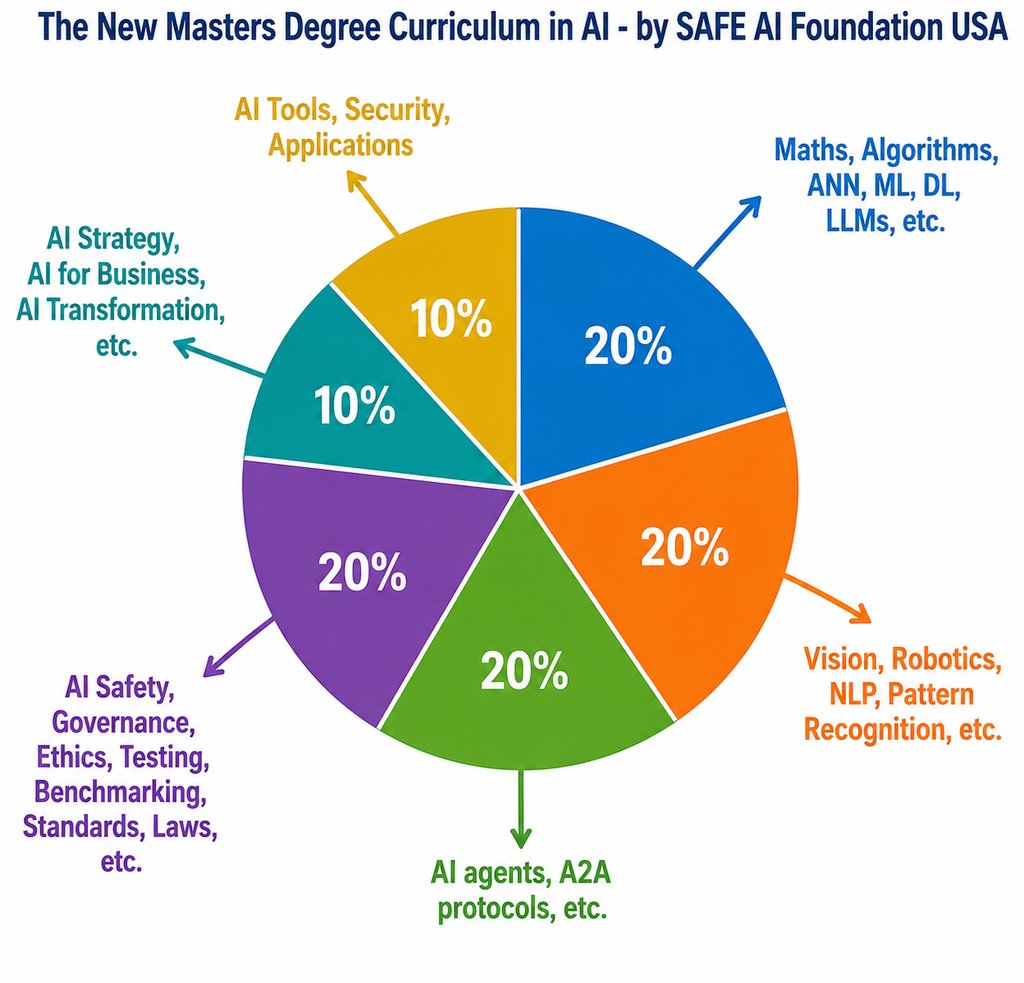
AI now involves more than just computer science. Graduates need to know more about topics outside computer science, such as AI Ethics, governance, standards, security, AI Tools, AI agents, rules, laws, etc.
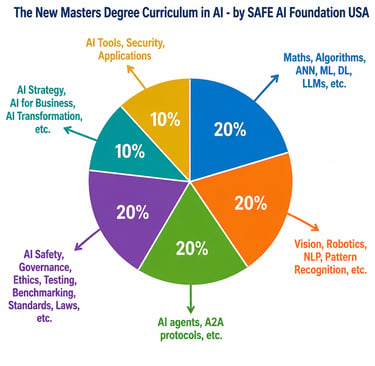
The SAFE AI Foundation recommends the 60-40 model, where at least 40% of the curriculum lies outside of computer science (see below). Some universities may prefer a 55-45 model, with a greater weightage given to non-CS subjects.
Topics on AI strategy, AI for business and AI Transformation are useful for graduates who enter into AI business and management roles. Topics on AI Tools, Applications and Security will ensure graduates are familiar with existing AI tools, how to use them at work, and the security aspects (how to keep AI safe and prevent from attacks and misuse).
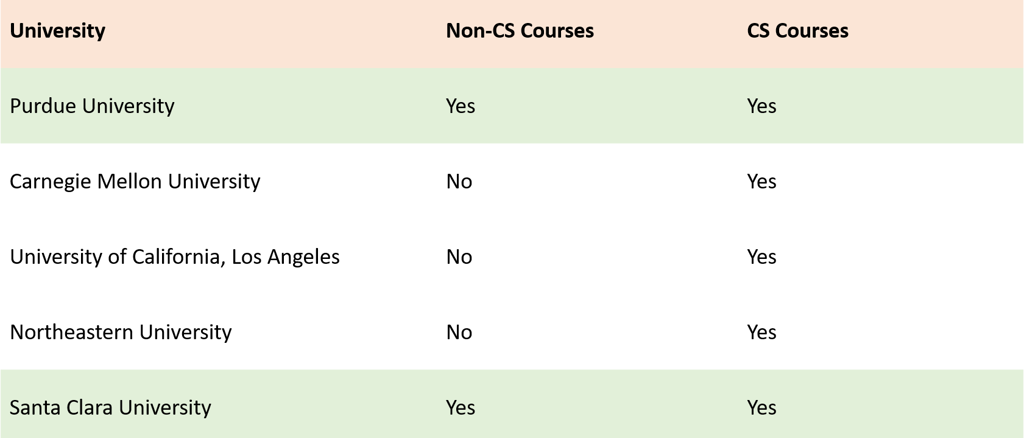
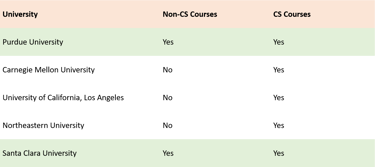
We compare the existing (May 2026) Masters in AI degree programs offered by 5 American Universities. As shown below, there are still universities who have not broaden their curriculum to include essential topics such as AI Safety, Governance, Ethics, Testing, Standards, Laws, Benchmarking, AI Security, AI Transformation, AI Strategy, AI Tools and Applications.
NOTE: It is the university's role to define detailed syllabus, labs, projects, and course duration for its Masters in AI program, not the SAFE AI Foundation. The Foundation can only recommend what would be a balanced curriculum, on what to include to best reflect current needs and suitability.