AI Digest
APRIL / MAY 2026
~ ~ \\ // ~ ~
authored by
Andrew Bloom
13 APR 2026
Copyright (C) SAFE AI Foundation
'Why AI Ethics Matters Today?'
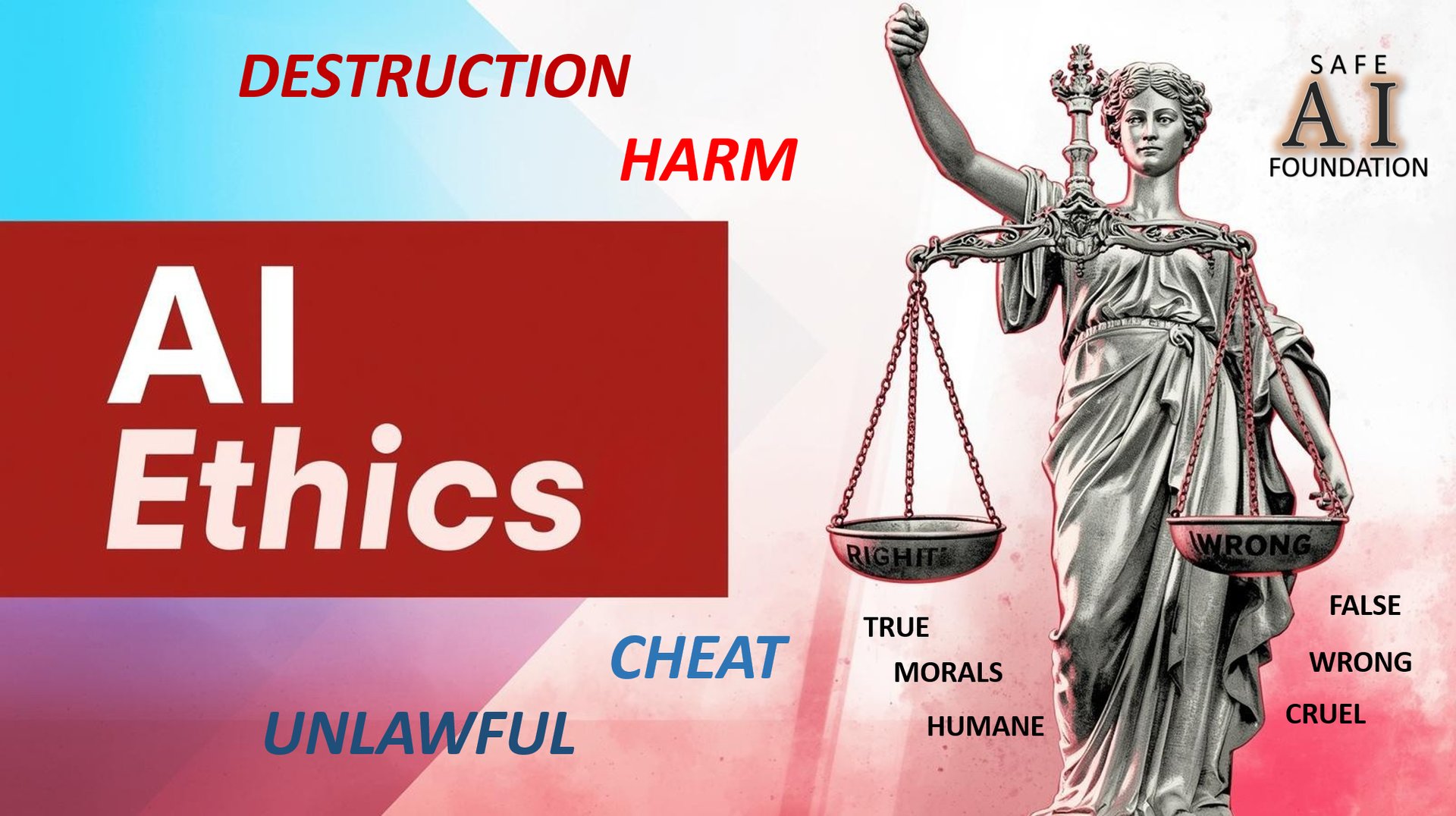
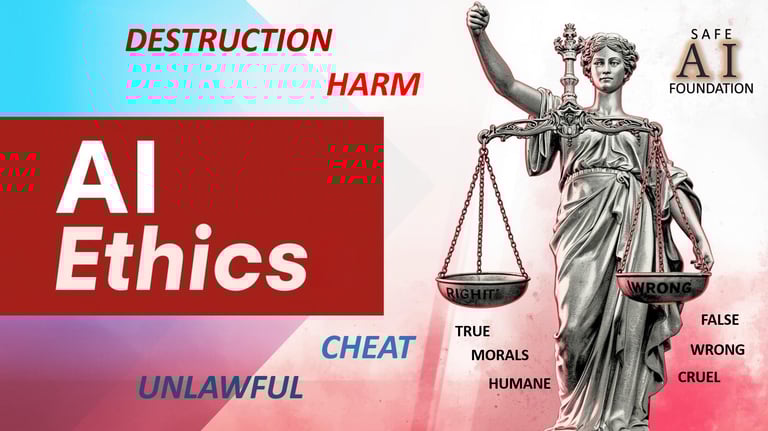
Artifical intelligence is advancing quickly, and with that growth comes a serious human question, not only what AI can do, but what it SHOULD DO. That is why AI ETHICS matters today. It is not a secondary concern, and it is not something to be discussed only after systems are built. It must be part of the foundation from the beginning.
Too often, conversations about AI move immediately toward innovation, trust, efficiency, or adoption. Those are important concerns, but they come later. The first question is ethical. Before any institution asks people to trust AI, it must first ask whether the system itself is honest, truthful, morally right, and grounded in humanity. If those elements are missing, then everything built on top of them becomes unstable.
This is where AI ETHICS must be clearly defined.
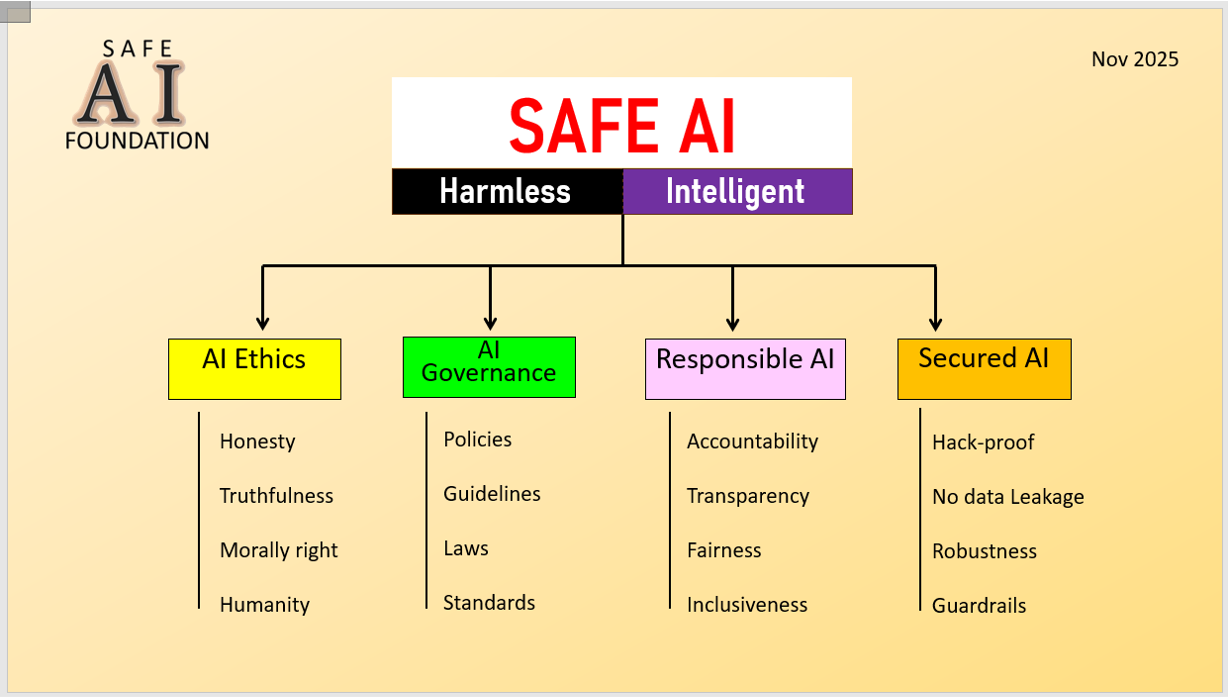
AI Ethics is not just a general commitment to doing better. It is a concrete moral framework that asks where AI is being developed and used in ways that are honest, truthful, morally right, and humane. Those are not decorative values. They are the first test of whether AI deserves a place in decisions that affect people's lives.
HONESTY - means that AI should not deceive. It should not pretend to know what it does not know. It should not present uncertain outputs as facts. It should not hide its limitations, its role, or the extent of human involvement behind it. If an AI system gives users a false sense of certainty, objectivity, or authority, honest has already been compromised.
TRUTHFULNESS - means that AI should not generate, amplify, or legitimize falsehood. This includes fabricated content, distorted claims, misleading summaries ,manipulated media, and outputs that sound convincing, while being untrue. Truthfulness matters because AI is increasingly shaping what people read, believe, and act upon. When truth breaks down, public confidence breaks down with it.
MORALLY RIGHT - means that AI must be guided by standards of fairness, responsibility, restraint, and accountability. Not everything that can be automated should be automated. Not every technically possible use is ethically justified. A system that is efficient but unjust, productive but harmful, or scalable but irresponsible cannot be called ethical simply because it performs well!
HUMANITY - means that AI must remain answerable to human dignity and human well-being. It should support human life, not reduce people to data points, patterns or categories. It should not erode empathy, replace conscience, or weaken moral responsibility. Technology should remain in service to human beings, not the other way around.
These four elements give shape to what AI Ethics actually means. They also make clear why ethics cannot be treated as a public relations language. Ethics is not there to make institutions look good and responsible. It is there to determine whether they are in fact, responsible.
That is why trust should not be the starting point of the conversation. Trust comes later. Trust is the result of something deeper. Trust comes only AFTER AI Ethics has been installed and taken seriously, after AI Governance has created accountability, after Responsible AI has shaped practice, and after Secured AI has protected systems from abuse, misuse, and harm. Trust is not the foundation Trust is what becomes possible when the is sound.
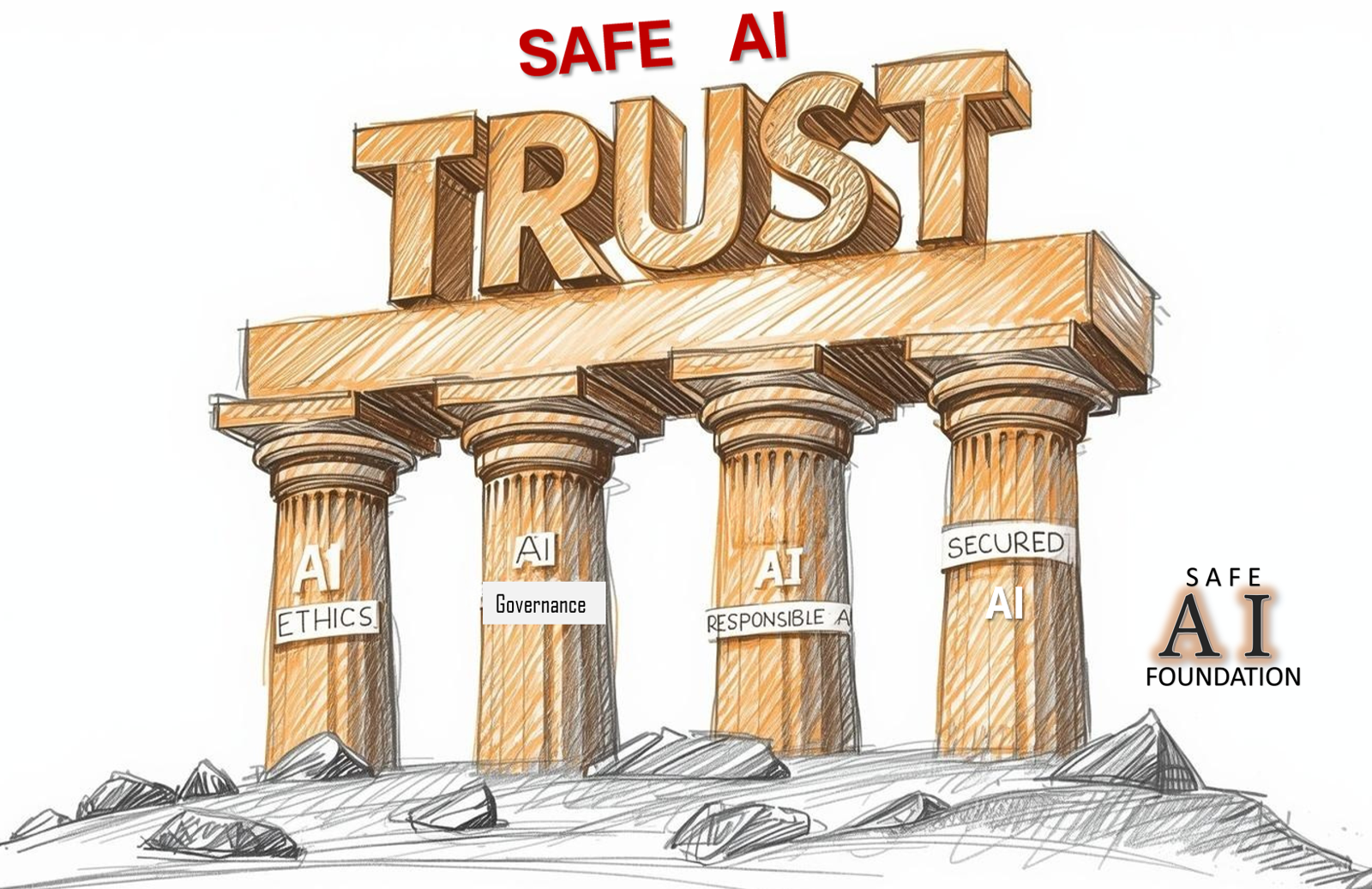
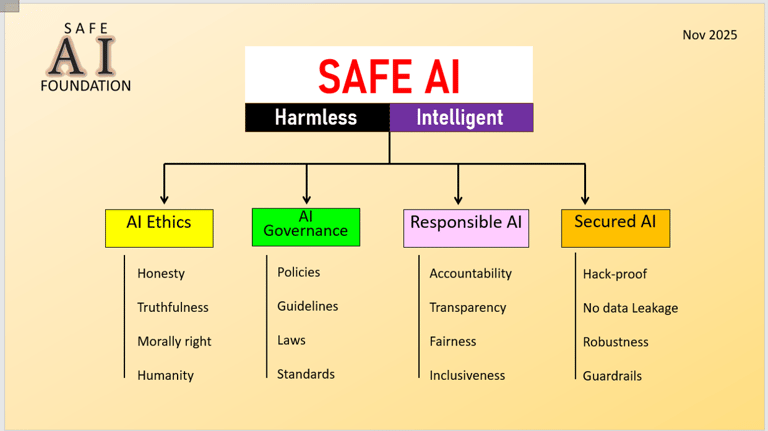
The distinction matters because many organizations have reversed the order. They began by speaking about trust. They publish principles, release statements, and promise responsible innovation But TRUST cannot be announced into existence. It must be earned. And it is only earned when institutions can show that their systems are ethically grounded, responsibly governed, securely managed, and subject to meaningful oversight.
If institutions fail to take on AI Ethics, the consequences will not be minor.
Bad things will happen.
AI systems can mislead people by presenting false information with confidence. They can reinforce discrimination in hiring, lending, policing, education, and healthcare while appearing neutral on the surface. They can make important decisions without explanation, leaving people unable to understand why they were denied, flagged, ranked, or excluded. They can be manipulated, exploited, or breached, exposing private data and placing individuals and institutions at risks. They can be used to deceive, impersonate, influence, and distort public discourse. They can weaken human judgment by encouraging over- reliance on systems that were never worthy of such trust in the first place.
The damage is not only technical. It is human.
When AI is not ethical, people can be harmed unfairly, silently, and at scale. Reputations can be damaged. Opportunities can be lost. Rights can be weakened. Falsehood can spread faster than correction. Institutions can begin to rely on systems they do not fully understand and cannot fully defend. In the worst cases, AI can magnify injustice while shielding it behind complexity.
This is why SAFE AI matters. SAFE AI is not simply AI that functions. It is AI that behaves and operates within ethical boundaries. It is AI that respects truths, avoids deception, protects people, and remains accountable to human values. Good AI must meet that same standard. It is not enough for a system to be useful, fast, or impressive. It must also be worthy of the responsibility placed in it.
That is where AI governance becomes a necessity. Governance turns ethical concerns into institutional practice. It asks who is accountable, what standards and rules apply, what risks are being monitored, what uses are prohibited, when human review is required, and what safeguards are in place before harm occurs. Responsible AI grows out of that discipline. Secured AI strengthens it further by ensuring that systems are protected against intrusion, abuse, leakage, and malicious use. These layers matter because ethics without structure can easily collapse under pressure.
The central issue today is not whether AI will continue to expand. It will. The real issue is whether that expansion will be guided by moral seriousness or by money or convenience alone. If institutions build first and reflect later, the cost will be measured in terms of damaged lives, weakened confidence, financial loss, and systems that grow more powerful while becoming less trustworthy and safe. If, however, they begin with ethics, governance, responsibility, and security can follow in the right order, trust can then emerge on solid ground, yielding SAFE AI.
This is why AI Ethics matter today! It matters because AI is no longer experimental at the margins. It is moving into the center of human decision-making. And once that happens, the question is no longer only what AI can achieve. The question becomes whether what it achieves is honest, truthful, morally right, useful, and humane.
That is the standard that must come first. Without it, trust is premature. With it, SAFE AI and GOOD AI become more than slogans. They become a reality.
~~~ end ~~~
REFEERENCES
What is SAFE AI? See: https://safeaifoundation.com/what-is-safe-ai
Good AI. See:https://safeaifoundation.com/good-ai
Bad AI. See: https://safeaifoundation.com/bad-ai
AI Governance & Standards. See: https://safeaifoundation.com/ai-governance and https://safeaifoundation.com/ai-standards
Disclaimer: The information in this digest is provided “as it is”, by the SAFE AI FOUNDATION, USA. The use of the information provided here is subject to the user’s own risk, accountability, and responsibility. The SAFE AI FOUNDATION and the author are not responsible for the use of the information by the user or reader. All copyrights related to this article are reserved by the author. Please reference this article if you wish to cite it elsewhere.
Note: The SAFE AI Foundation is a non-profit organization registered in the State of California and it welcomes inputs and feedback from readers and the public. If you have things to add concerning AI Ethics and would like to volunteer or donate, please email us at: contact@safeaifoundation.com